


How Does the High-Efficiency Transformer Design in Laptop Adapters Minimize Energy Loss During AC to DC Conversion?
Release Time : 2026-03-18
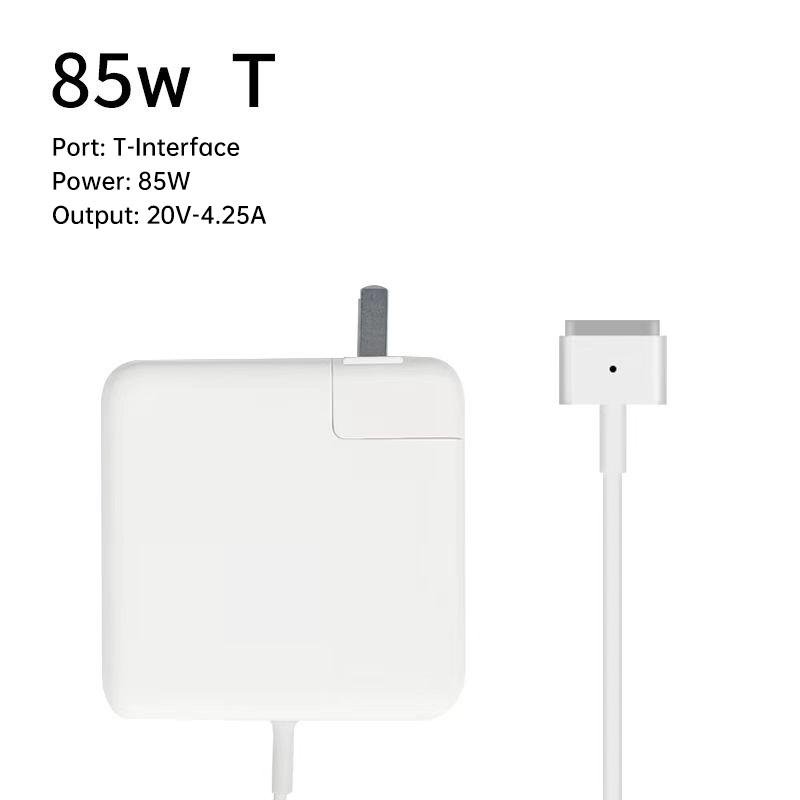
The modern laptop adapter is a marvel of compact engineering, serving as the critical bridge between the volatile high-voltage alternating current of the wall outlet and the precise, stable direct current required by sensitive portable computers. At the heart of this transformation lies the high-efficiency transformer design, a component that has evolved significantly from the bulky, heat-generating units of the past. The primary challenge in AC to DC conversion is not merely changing the type of current, but doing so with minimal energy loss, as any wasted energy manifests primarily as heat. In traditional linear power supplies, excess voltage was dissipated as thermal energy through large heat sinks, resulting in efficiencies often below 60%. Modern laptop adapters, however, utilize switch-mode power supply (SMPS) technology centered around high-frequency transformers, which fundamentally alters the physics of conversion to achieve efficiencies exceeding 85%, thereby minimizing waste and maximizing the power delivered to the device.
The core mechanism behind this efficiency gain is the operation at high switching frequencies, typically ranging from tens of kilohertz to several megahertz. In a standard low-frequency transformer operating at 50 or 60 Hz, the magnetic core must be large and heavy to prevent saturation and handle the slow oscillation of the magnetic field. By contrast, a high-frequency transformer can be drastically smaller because the rapid switching allows for a much higher rate of energy transfer per unit of core material. This reduction in size is not just a matter of portability; it directly correlates to reduced resistive losses in the windings and lower hysteresis losses in the core material. The use of advanced ferrite cores, which have low magnetic loss characteristics at high frequencies, ensures that the magnetic energy is transferred to the secondary coil with exceptional fidelity, leaving very little energy to be dissipated as heat within the transformer itself.
Furthermore, the minimization of energy loss is achieved through sophisticated control of the switching elements, typically MOSFETs (Metal-Oxide-Semiconductor Field-Effect Transistors). In a high-efficiency design, these transistors act as near-perfect switches, spending negligible time in the linear region where they would act as resistors and generate heat. Instead, they transition almost instantaneously between fully on and fully off states. Advanced driver circuits optimize the timing of these transitions to reduce switching losses, which occur during the brief moments when both voltage and current are present across the transistor. Techniques such as Zero Voltage Switching (ZVS) and Zero Current Switching (ZCS) are often employed to ensure that the transistor turns on or off only when the voltage across it or the current through it is zero, effectively eliminating the overlap that causes significant energy dissipation in less refined designs.
The design also incorporates synchronous rectification on the output side to further curb energy loss. In conventional adapters, diodes are used to convert the high-frequency AC from the transformer secondary into DC. However, diodes have a fixed forward voltage drop, usually around 0.7 volts for silicon diodes, which results in a constant power loss proportional to the output current. In high-efficiency laptop adapters, these diodes are replaced by low-resistance MOSFETs controlled by a synchronous rectifier controller. These MOSFETs have an on-resistance that is fractions of an ohm, leading to a voltage drop that is significantly lower than that of a diode, especially at the high currents required by modern laptops. This substitution can improve overall efficiency by several percentage points, a substantial gain in an industry where every fraction of a percent counts towards thermal management and energy certification standards.
Thermal management is intrinsically linked to the efficiency of the transformer design, as reduced energy loss directly translates to lower operating temperatures. When an adapter operates with high efficiency, less heat is generated within the enclosure, reducing the need for large heatsinks or active cooling fans, which themselves consume power and add bulk. The lower thermal load also enhances the longevity of the internal components, as electrolytic capacitors and semiconductor devices degrade faster at elevated temperatures. By keeping the transformer and surrounding circuitry cool through efficient design rather than passive dissipation, manufacturers ensure that the adapter maintains its peak performance over years of use, even under continuous heavy load conditions such as gaming or video rendering.
Moreover, the high-efficiency transformer design plays a crucial role in maintaining power quality and stability. The precise regulation of the output voltage, facilitated by the negative feedback loop mentioned in broader adapter specifications, relies on the transformer's ability to respond quickly to load changes without significant energy lag. A well-designed high-frequency transformer has low leakage inductance, which allows for tighter coupling between the primary and secondary windings. This tight coupling ensures that energy is transferred immediately when demanded by the laptop, preventing voltage dips that could cause system instability. The efficiency of the transfer means that the adapter does not need to draw excessive current from the mains to compensate for internal losses, resulting in a cleaner power factor and reduced strain on the electrical grid.
In the context of global energy conservation, the cumulative impact of high-efficiency laptop adapters is profound. With billions of laptops in use worldwide, even a small improvement in average adapter efficiency from 80% to 90% represents a massive reduction in global electricity consumption and carbon emissions. Regulatory bodies like the U.S. Department of Energy and the European Union have implemented stringent standards, such as Energy Star and CoC Tier 2, which mandate minimum efficiency levels and maximum no-load power consumption. These regulations have driven innovation in transformer design, pushing manufacturers to adopt better core materials, optimized winding geometries, and smarter control algorithms. The result is a generation of power supplies that are not only smaller and lighter but also environmentally responsible, turning what was once a wasteful component into a model of energy conservation.
Ultimately, the high-efficiency transformer design in laptop adapters represents a convergence of material science, semiconductor physics, and control theory. By leveraging high-frequency operation, advanced ferrite cores, synchronous rectification, and precise switching control, these devices minimize energy loss to unprecedented levels. This efficiency ensures that the maximum amount of power drawn from the wall outlet is delivered to the laptop for computation and battery charging, rather than being wasted as heat. As laptop processors become more powerful and energy demands rise, the role of the adapter as a highly efficient power gateway becomes even more critical, ensuring that portable computing remains sustainable, reliable, and thermally manageable in an increasingly connected world.
The core mechanism behind this efficiency gain is the operation at high switching frequencies, typically ranging from tens of kilohertz to several megahertz. In a standard low-frequency transformer operating at 50 or 60 Hz, the magnetic core must be large and heavy to prevent saturation and handle the slow oscillation of the magnetic field. By contrast, a high-frequency transformer can be drastically smaller because the rapid switching allows for a much higher rate of energy transfer per unit of core material. This reduction in size is not just a matter of portability; it directly correlates to reduced resistive losses in the windings and lower hysteresis losses in the core material. The use of advanced ferrite cores, which have low magnetic loss characteristics at high frequencies, ensures that the magnetic energy is transferred to the secondary coil with exceptional fidelity, leaving very little energy to be dissipated as heat within the transformer itself.
Furthermore, the minimization of energy loss is achieved through sophisticated control of the switching elements, typically MOSFETs (Metal-Oxide-Semiconductor Field-Effect Transistors). In a high-efficiency design, these transistors act as near-perfect switches, spending negligible time in the linear region where they would act as resistors and generate heat. Instead, they transition almost instantaneously between fully on and fully off states. Advanced driver circuits optimize the timing of these transitions to reduce switching losses, which occur during the brief moments when both voltage and current are present across the transistor. Techniques such as Zero Voltage Switching (ZVS) and Zero Current Switching (ZCS) are often employed to ensure that the transistor turns on or off only when the voltage across it or the current through it is zero, effectively eliminating the overlap that causes significant energy dissipation in less refined designs.
The design also incorporates synchronous rectification on the output side to further curb energy loss. In conventional adapters, diodes are used to convert the high-frequency AC from the transformer secondary into DC. However, diodes have a fixed forward voltage drop, usually around 0.7 volts for silicon diodes, which results in a constant power loss proportional to the output current. In high-efficiency laptop adapters, these diodes are replaced by low-resistance MOSFETs controlled by a synchronous rectifier controller. These MOSFETs have an on-resistance that is fractions of an ohm, leading to a voltage drop that is significantly lower than that of a diode, especially at the high currents required by modern laptops. This substitution can improve overall efficiency by several percentage points, a substantial gain in an industry where every fraction of a percent counts towards thermal management and energy certification standards.
Thermal management is intrinsically linked to the efficiency of the transformer design, as reduced energy loss directly translates to lower operating temperatures. When an adapter operates with high efficiency, less heat is generated within the enclosure, reducing the need for large heatsinks or active cooling fans, which themselves consume power and add bulk. The lower thermal load also enhances the longevity of the internal components, as electrolytic capacitors and semiconductor devices degrade faster at elevated temperatures. By keeping the transformer and surrounding circuitry cool through efficient design rather than passive dissipation, manufacturers ensure that the adapter maintains its peak performance over years of use, even under continuous heavy load conditions such as gaming or video rendering.
Moreover, the high-efficiency transformer design plays a crucial role in maintaining power quality and stability. The precise regulation of the output voltage, facilitated by the negative feedback loop mentioned in broader adapter specifications, relies on the transformer's ability to respond quickly to load changes without significant energy lag. A well-designed high-frequency transformer has low leakage inductance, which allows for tighter coupling between the primary and secondary windings. This tight coupling ensures that energy is transferred immediately when demanded by the laptop, preventing voltage dips that could cause system instability. The efficiency of the transfer means that the adapter does not need to draw excessive current from the mains to compensate for internal losses, resulting in a cleaner power factor and reduced strain on the electrical grid.
In the context of global energy conservation, the cumulative impact of high-efficiency laptop adapters is profound. With billions of laptops in use worldwide, even a small improvement in average adapter efficiency from 80% to 90% represents a massive reduction in global electricity consumption and carbon emissions. Regulatory bodies like the U.S. Department of Energy and the European Union have implemented stringent standards, such as Energy Star and CoC Tier 2, which mandate minimum efficiency levels and maximum no-load power consumption. These regulations have driven innovation in transformer design, pushing manufacturers to adopt better core materials, optimized winding geometries, and smarter control algorithms. The result is a generation of power supplies that are not only smaller and lighter but also environmentally responsible, turning what was once a wasteful component into a model of energy conservation.
Ultimately, the high-efficiency transformer design in laptop adapters represents a convergence of material science, semiconductor physics, and control theory. By leveraging high-frequency operation, advanced ferrite cores, synchronous rectification, and precise switching control, these devices minimize energy loss to unprecedented levels. This efficiency ensures that the maximum amount of power drawn from the wall outlet is delivered to the laptop for computation and battery charging, rather than being wasted as heat. As laptop processors become more powerful and energy demands rise, the role of the adapter as a highly efficient power gateway becomes even more critical, ensuring that portable computing remains sustainable, reliable, and thermally manageable in an increasingly connected world.